

Few San Diego learning adventures capture imaginations like a USS Midway Museum field trip. Stepping onto the 1,001-foot flight deck places students in a dynamic environment where engineering ingenuity, Cold-War history, and leadership challenges converge. The ship’s diverse exhibits, from engine rooms to flight simulations, provide opportunities to explore scientific concepts such as energy transfer and the heating curve, while also connecting historical events to social studies lessons. Welcoming over 50,000 students annually for standards-aligned programs across grades 2-12, the museum serves as an expansive laboratory for physics demonstrations, leadership exercises, and primary-source investigations.
Planning a Purposeful Visit
- Match Objectives to Museum Resources
Start by browsing the Midway’s School & Youth Programs page, which lists grade-banded lessons in math, science, and social studies. Sessions run in dedicated classrooms aboard ship and are led by museum educators.
- Secure Group Tickets Early
Student and youth groups of 10 or more qualify for a discounted $10 per-student rate (adults $15) when reservations are made at least one week in advance; a 1:10 chaperone ratio is required.
- Move Everyone Safely and Efficiently
Coordinating transit is just as crucial as choosing the lesson. Arranging a San Diego bus charter—with licensed drivers, appropriate insurance, and safe, climate-controlled seating—allows you to concentrate on learning outcomes instead of freeway logistics.
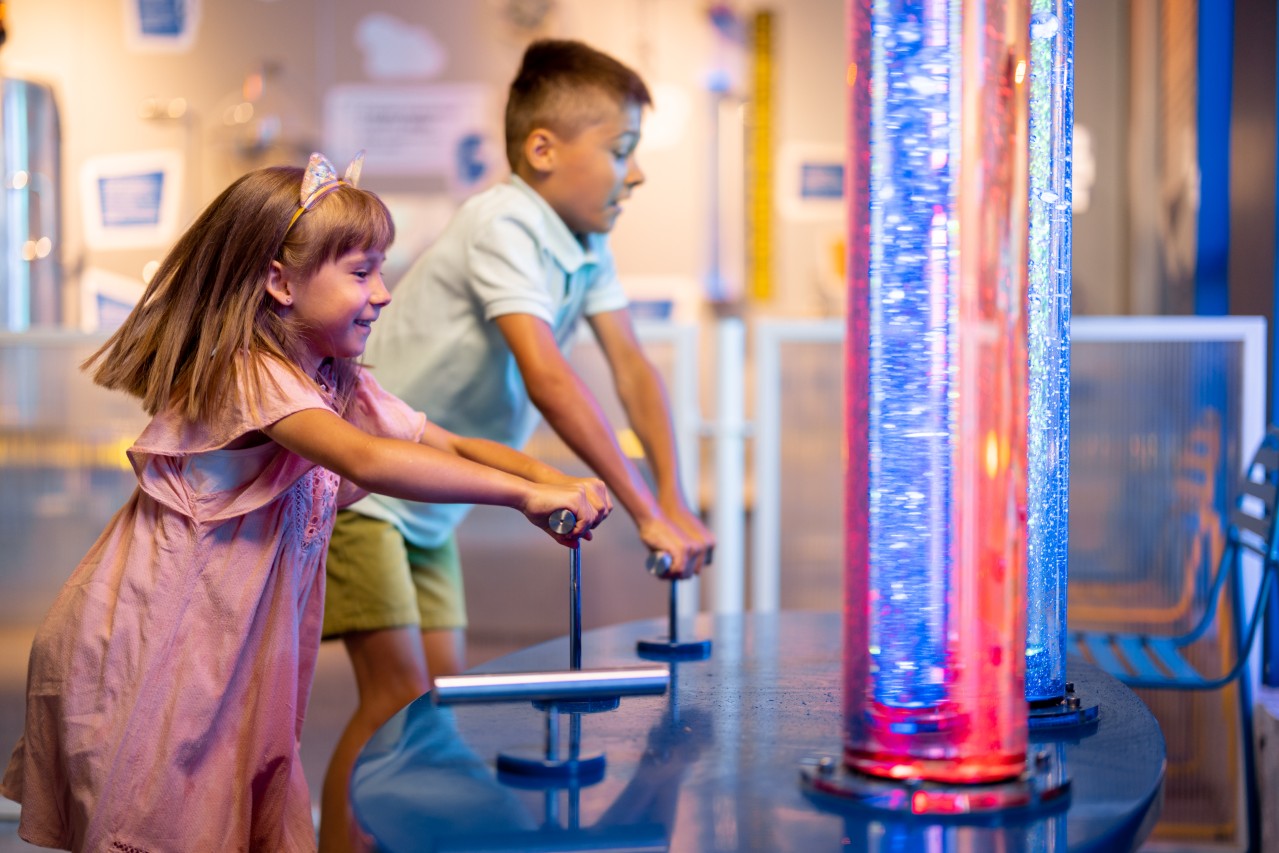
Physics in Action on a 1,001-Foot Classroom
The ship serves as a large-scale laboratory where students can take part in physics activities and observe real mechanisms in action so that they can apply classroom concepts to authentic equipment.
- Catapult & Trap Talks – Docents explain how steam catapults launch 25-ton aircraft, sharing stories of pilot experiences. Students can stand near the launch area, feel the size of the machinery, and calculate acceleration and G-forces from data provided during the tour.
- Elevator Power – While standing beside the towering aircraft elevators, students see how jets were moved between decks. Educators can demonstrate hydraulic principles using diagrams and invite learners to relate observed movement to simple machines studied in class.
- Flight-Deck Aerodynamics – On the open deck, students use handheld wind meters to record gusts at various points. They can fly paper gliders, observe how air currents affect them, and discuss how wind patterns influence real aircraft operations on carriers.
- Newton’s Laws Below Deck – Inside the engine room, students walk among crankshafts and turbines, identifying examples of action–reaction forces and inertia. Museum staff can prompt learners to connect these observations to Newton’s laws through guided questions and hands-on demonstrations.
- Heating Curve Exploration – The concept of a heating curve can also be explored during the Midway visit. In the engine room, demonstrate how water absorbs heat to produce steam and highlight points where temperature stays constant during phase changes. Relate this to the flat portions of a heating curve where latent heat is absorbed. On the flight deck, compare temperatures on sunlit and shaded metal surfaces to link these observations with the initial rising slope of the curve. After the visit, students can perform a lab heating water and plotting temperature versus time to connect their field observations with classroom data.
Assessment tip: Ask teams to film a two-minute “physics news flash” summarizing one observation, then edit clips into a post-trip montage.
Leadership Lessons from the Quarterdeck
The ship’s command structure and historical missions provide a practical setting for exploring leadership concepts. Students can experience decision-making processes and observe how roles interact in high-pressure environments.
- Chain-of-Command Simulation – Before arrival, assign students roles (captain, air boss, deck crew). On the ship, walk the actual routes between the bridge and flight deck, timing communication relays to reveal the importance of clarity under pressure.
- Decision-Making Under Duress – In ready rooms, analyze primary-source audio of pilots reacting to sudden storm fronts. Ask: How did training shape calm responses?
- Case Study: Operation Frequent Wind – Explore how Midway sailors evacuated 3,073 refugees during the fall of Saigon in 1975. Students document leadership traits—initiative, adaptability, empathy—then connect them to modern community projects.
Social-Studies Storylines: From WWII to the Cold War and Beyond
This part of the visit invites students to see history through authentic artifacts and first-hand accounts, connecting classroom narratives to lived experiences aboard the carrier.
Battle of Midway Immersive Theater
An engrossing, multisensory film places learners inside the pivotal 1942 battle, priming discussions on strategic thinking and technological innovation.
Cold-War Carrier Life
Below deck, berthing quarters, and the mess hall illustrate daily routines that sustained morale during long deployments. Have students compare Cold War primary sources—letters home, shipboard newspapers—to modern social media posts from sailors.
Oral-History Kiosks
First-person accounts from Midway veterans model interviewing techniques for budding historians. Encourage students to storyboard their own local-history oral-history project after the visit.
Pre- and Post-Trip Activities that Cement Learning
Before the visit, students work in teams on a research jigsaw exploring naval history and innovations such as radar, angled flight decks, or steam catapults. This preparation builds background knowledge and reinforces new vocabulary. During the trip, they keep an interactive reflection journal, sketching artifacts, noting a physics principle observed, and posing a leadership question. This exercise promotes active observation and critical thinking while on board. After they return to class, students create a mini-documentary, a podcast, or an infographic that connects at least two disciplines explored during the field trip. This final task turns their experience into shareable mastery evidence.
Quick Logistics Checklist
- Booking window: ≥ 7 days before visit for discounts.
- Chaperones: 1 adult per 10 students (free within ratio except Saturdays).
- Hours: 10 a.m.-5 p.m. (last entry 4 p.m.); closed Thanksgiving & Christmas.
- Lunch: Packables welcome; limited seating on pier.
- Accessibility: Elevators reach most decks; request elevator button codes at the admission desk.
Chart the Course from Inspiration to Implementation
A visit to the USS Midway brings classroom ideas to life, turning lessons into tangible experiences. Observing ship systems, listening to personal accounts, and engaging with historical artifacts encourages lasting curiosity. With thoughtful preparation and reflection, this field trip can spark meaningful connections across physics, leadership, and social studies in the context of San Diego education.
The goal is for every student to leave with a clearer sense of how what they learn in class relates to the real world and their own potential.