Puzzles challenge the mind in ways that extend far beyond leisure. Thus, since they require concentration, pattern recognition, and structured thought, they are powerful tools for developing math and logic skills. As we discuss this topic below, we also highlight specific types of puzzles that contribute to these abilities.
How Puzzles Improve Math and Logic Skills
Puzzles come in many forms, from number grids and word riddles to spatial challenges like tangrams and cubes. Puzzles improve your mathematical and logical skills in the following ways:
Strengthen Problem-Solving Skills
Every puzzle begins with uncertainty. You get a set of pieces, numbers, or clues and find a path toward the solution. That uncertainty is what makes puzzles such powerful training for problem-solving skills. They mirror real-world challenges where you don’t have a formula ready but must instead think critically about the best starting point.
Take Kakuro as an example. Each row and column has to add up to a certain total, which forces you to test different combinations of numbers. When one option fails, you backtrack, refine your approach, and move forward again. That cycle of hypothesis, testing, and correction builds resilience and methodical thinking. Similarly, crossword riddles demand that you decode one clue at a time, often relying on partial answers to unlock new possibilities, which teaches you to value incremental progress.
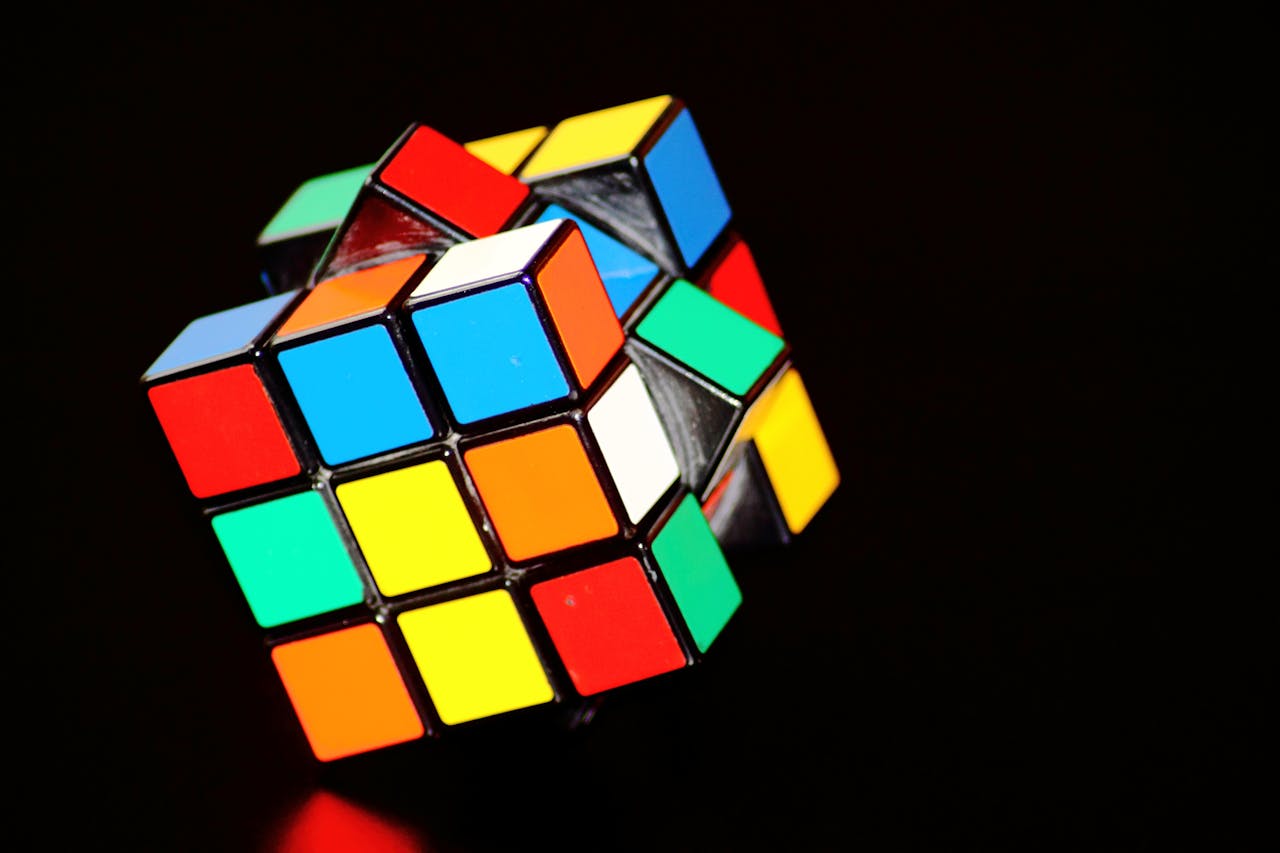
One of the best demonstrations of structured problem-solving is learning how to solve a 3×3 Rubik’s Cube. At first glance, the scrambled cube looks chaotic. Yet guides like the one from SpeedCubeShop break the task into clear steps: solve a cross, complete the corners, align the second layer, and finish with the top.
Each phase represents a sub-problem that leads to the next. By following and practicing this method, you experience firsthand how dividing a large, overwhelming puzzle into smaller, manageable goals transforms frustration into steady progress.
Support Critical Thinking Skills
Critical thinking is more than finding an answer—it’s the ability to weigh options, judge accuracy, and refine conclusions when new information appears. Puzzles sharpen this by presenting incomplete data and requiring you to fill in the gaps with reasoning. Unlike simple drills, they don’t reward speed alone. They reward careful analysis, persistence, and the willingness to challenge assumptions, all of which build strong critical thinking skills.
Consider Sudoku. Success depends on eliminating wrong choices and confirming valid ones step by step. Logical deduction supports every number you place, not guesswork. Similarly, lateral thinking puzzles give you scenarios where the obvious explanation is rarely correct. You must question your first impression, consider alternative angles, and then build a case for the answer that fits all the clues. These exercises train the mind to pause, evaluate, and think beyond surface details.
Crossword puzzles also push critical thinking by combining vocabulary knowledge with reasoning about context. A single crossword clue may suggest several possible answers at first, yet only one will align correctly with the letters formed by the intersecting words. The skill lies in holding multiple possibilities in mind and narrowing them with evidence.
Over time, repeating this process builds sharper critical thinking skills that transfer directly to studying mathematics, writing proofs, and solving everyday problems where decisions must be reasoned, not rushed.
Reinforce Math Practice
Math becomes stronger with regular practice, but drills can feel repetitive and dull. Puzzles provide the same reinforcement in a way that sparks curiosity and engagement. When you work through number challenges, you apply arithmetic rules repeatedly, which cements skills without the boredom of worksheets. It makes puzzles a valuable form of math practice that students and adults alike can enjoy.
Take KenKen, for example. Each grid requires you to perform addition, subtraction, multiplication, or division within small cages while respecting overall Sudoku-like rules. The puzzle demands both accuracy and creativity, which deepens fluency with basic operations.
Magic squares also reinforce additional skills while teaching symmetry and balance. In each case, mathematical thinking grows stronger because the mind is motivated by solving a problem rather than memorizing a formula.
Spatial puzzles extend this benefit by reinforcing geometry and visualization. Tangrams ask you to form specific shapes from flat pieces, while block puzzles challenge you to fit three-dimensional pieces into a solid form. These activities strengthen the ability to manipulate figures in your mind, a skill that supports geometry and trigonometry.
Encourage Logic Exercises
Logic exercises differ from arithmetic puzzles because they emphasize reasoning over calculation. They take many forms, from sequence challenges and pattern completions to logic grids, binary puzzles, and riddles that require you to decide whether statements are true or false. Each one pushes you to think carefully about rules and relationships rather than simply crunching numbers. This focus makes them ideal for developing structured, disciplined thinking.
When you work through a logic grid puzzle, for example, you begin with a few scattered clues and gradually eliminate impossibilities until only one solution remains. Every step depends on linking pieces of information into a coherent chain. Binary puzzles do something similar: filling squares with zeros and ones demands consistency, forcing you to apply logical consequences across rows and columns. In both cases, your brain learns to anticipate outcomes, check for contradictions, and refine choices with evidence.
Over time, regular practice with logic exercises builds habits of proof-style thinking. You learn to construct arguments step by step, notice subtle flaws, and recognize when a conclusion does not follow the premises. These skills extend directly into mathematics, where logic forms the foundation of proofs, and into computer science, where algorithms rely on precise reasoning.
Build Stronger Learning Strategies
Puzzles don’t only teach solutions; they teach the methods that lead to solutions. Each challenge requires you to choose an approach, test it, and adapt when it fails, which builds stronger learning strategies over time. Instead of diving in, you begin to notice the value of breaking problems into smaller steps, prioritizing the easiest moves, and revisiting earlier decisions when new insights appear. These habits make you more deliberate and efficient whenever you study.
For instance, in Sudoku, beginners often scan the grid randomly. However, with practice, they learn to look for rows or boxes with the most filled cells and start there. This targeted approach saves time and reduces frustration, showing how strategic entry points make a difference. Similarly, a complex crossword encourages you to begin with clues you know, then use those answers as anchors to tackle harder ones. In both cases, the strategy—not just the solution—determines success.
Conclusion
When learners engage with number grids, word riddles, or spatial challenges, they are not simply passing time; they are training the mind to think with clarity and purpose. The variety of puzzles ensures that math and logic skills, such as problem-solving and strategic planning, grow in balance rather than isolation.